History: Remembering Vladimir Ilyich Lenin on the Anniversary of His Passing
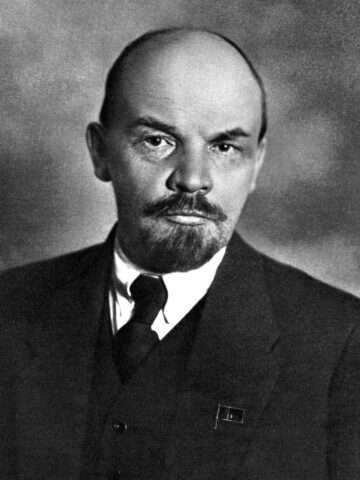
On 21 January 1924, Vladimir Ilyich Lenin, the lead architect of the 1917 October Revolution and the foundational theorist of the world’s first successful socialist state, died at the age of 53. His passing was not merely the death of a man but a seismic event in the history of the global class struggle. It marked the end of the Bolshevik Revolution’s first, most dynamic phase and opened a period of intense contestation over the socialist project’s future.
Lenin’s leadership was forged in the furnace of a collapsing Tsarist autocracy, a system of feudal-capitalist barbarity that oppressed workers, peasants, and entire nations within the Russian Empire. Lenin’s indispensable contribution was the translation of Marxist theory into a practical revolutionary science for the imperialist epoch. His works, such as What Is To Be Done?, Imperialism, the Highest Stage of Capitalism, and The State and Revolution, provided a ruthless analysis of capitalist monopoly, the role of the state as an instrument of class rule, and the necessity of a vanguard party to raise the consciousness of the proletariat from trade unionism to revolutionary politics. He understood that the peasantry, particularly the poor peasantry, were essential allies in the struggle, and that the “national question” was a pivotal terrain of anti-imperialist solidarity.
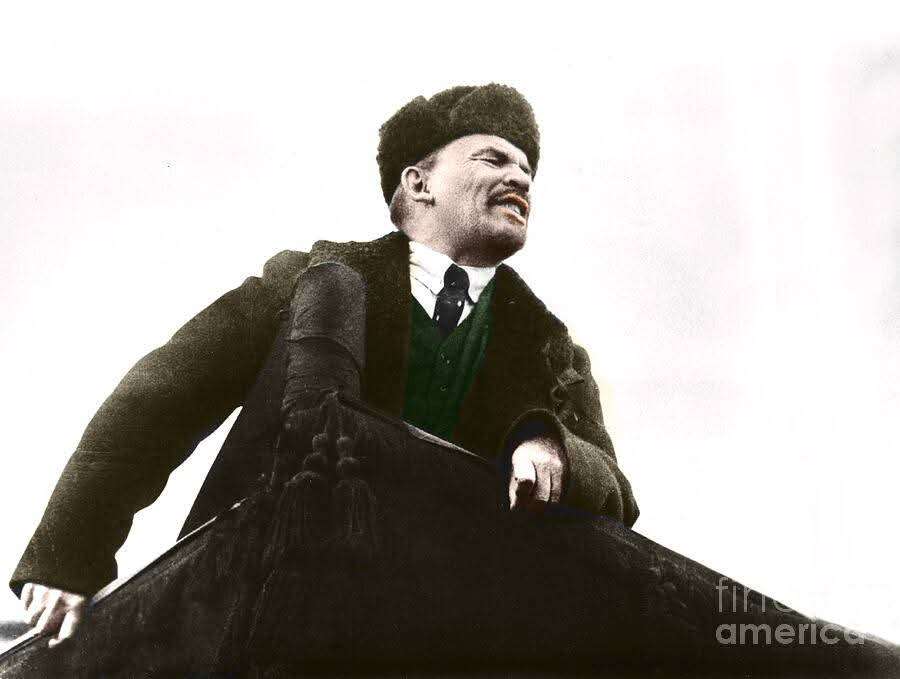
The October Revolution of 1917, under the slogan “Peace, Land, and Bread,” was a breathtaking act of popular power. It was the direct seizure of state authority by the Soviets, the councils of workers, soldiers, and peasants, which smashed the bourgeois provisional government that sought to continue a catastrophic imperialist war. As Chairman of the Council of People’s Commissars, Lenin presided over the immediate decreeing of radical measures. These included the redistribution of landed estates to the peasants, worker control over factories, the disestablishment of the church, and the right of nations to self-determination. This was the dictatorship of the proletariat in action, a state form exercising authority in the explicit interest of the exploited majority against the former exploiting classes.
Lenin’s final years, however, was one of unimaginable siege and tragedy. The nascent workers’ state was immediately invaded by fourteen capitalist imperialist armies, including those of the United States, Britain, and France, in alliance with counter-revolutionary White Guard forces. This brutal Civil War, compounded by economic blockade and famine, forced the implementation of “War Communism.” This was a policy of necessary but severe centralisation and grain requisitioning to feed the Red Army. While it saved the revolution militarily, it wrought immense social suffering and eroded the worker-peasant alliance. Recognising this crisis, Lenin engineered the strategic retreat of the New Economic Policy (NEP). This allowed a controlled revival of small-scale trade and agriculture to rebuild the shattered economy, as he insisted it was necessary “to take one step backward in order to take two steps forward later.”
His death created a political vacuum at a moment of profound tension. The revolution was isolated, economically fragile, and administratively strained by the challenges of building socialism in a backward, war-ravaged country. The international revolution, fervently anticipated by Lenin and the Bolsheviks, had receded after failures in Germany and Hungary. The ensuing struggle, often reductively personalised as a conflict between Stalin and Trotsky, was fundamentally a struggle over the path forward. It centred on the debate between “Socialism in One Country” and “Permanent Revolution.” This was a clash over whether the Soviet state could and must consolidate internally at the potential expense of international revolutionary impetus, or whether its survival was inextricably linked to instigating revolutions abroad. Lenin’s own late writings, his “Testament,” expressed grave concerns about bureaucratisation and the concentration of power, warning of a potential split in the party leadership.
The Fallout of Lenin’s death is inextricable from the history of the 20th century. The subsequent Stalinist consolidation, while overseeing rapid industrialisation and the defeat of Nazism at a colossal human cost, also solidified a model of socialism marked by bureaucratic centralism, the suppression of internal party democracy, and tragic purges. This model, for many, became synonymous with “communism” itself, a distortion with lasting consequences for the global left. It provided ideological fodder for anti-communist propaganda while also creating real contradictions for revolutionary movements worldwide. These movements had to reconcile the inspiring fact of a surviving workers’ state with its often repressive and authoritarian practices.
To remember Lenin is to engage critically and respectfully with a colossal revolutionary legacy. It is to recognise him as the premier strategist of revolutionary seizure of power in the age of imperialism, who demonstrated that the chain of global capitalism could break at its weakest link. It is to uphold his unyielding commitment to internationalism, his theoretical rigour, and his understanding of the state as an instrument to be seized, transformed, and ultimately withered away. Simultaneously, it requires a sober analysis of the contradictions that emerged in the revolution’s defensive isolation, the tragic choices of civil war, and the warnings about bureaucracy he himself issued. His body may have been embalmed and sanctified, but his true legacy is not a dogma to be preserved in a mausoleum. It is a living, critical method of analysis and action. It is the abiding belief that workers and peasants are not destined to be ruled, that imperialism is a parasitic and decadent system, and that collective, organised revolutionary action can shatter the old world and begin the arduous, imperfect, but necessary task of building a new one. The struggle for that world, to which he dedicated his life, continues…